Proof of Delivery: the complete guide to securing your deliveries
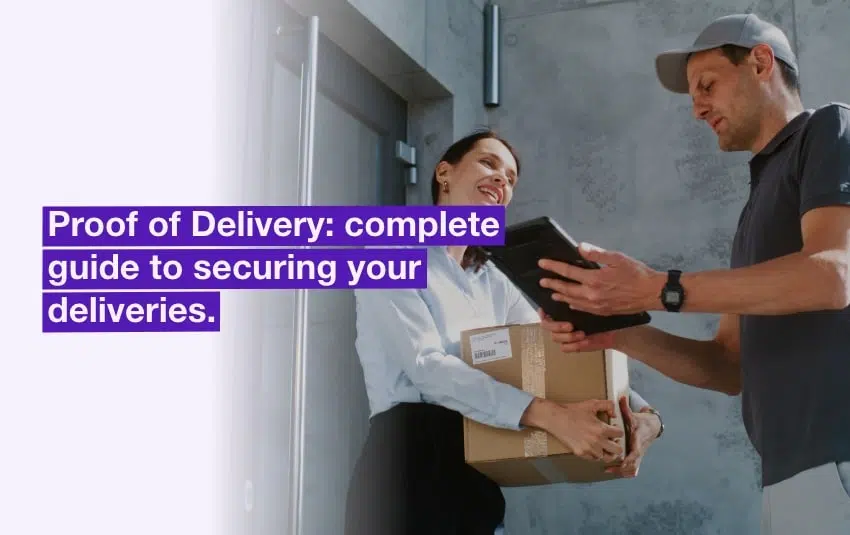
Proof of delivery has now become a key performance lever for delivery companies, field service operations and home service providers.
At AntsRoute, we see every day that field teams are not simply trying to “prove” that a job has been completed. What they really want is to save time, reduce disputes, streamline billing and eliminate makeshift processes (paper, Excel files, scattered photos, SMS messages).
In a last-mile context under constant pressure, with more demanding customers and ever-increasing operational constraints, proof of delivery becomes a structuring tool: it secures operations, improves the customer experience and restores visibility for teams.
Whether you manage B2C deliveries, home delivery of medical equipment or technical operations, a reliable proof of delivery helps reduce mental load, absorb the unexpected and stay in control in the field.
☝️ Key takeaways
Proof of delivery is no longer limited to a signature alone: today it combines photos, timestamps, geolocation and parcel identification to secure every delivery.
A digital proof of delivery (ePOD) has the same legal value as a handwritten signature, provided it complies with the applicable legal framework (eIDAS).
When integrated into routes and collected directly from the field, these supporting documents helps reduce disputes, speed up invoicing and secure last-mile delivery with AntsRoute.
Table of contents:
- What is a proof of delivery (POD)?
- Why delivery confirmation has become a strategic document
- The different types of proof of delivery
- Electronic proof of delivery (ePOD): a modern standard
- Real-world use case: last-mile delivery
- What AntsRoute customers say
- Business impact: far more than just proof
- How to implement an effective proof of delivery
- Does digital proof of delivery have legal value?
- Example of a digital proof of delivery (ePOD)
- AntsRoute guide: implementing a reliable, automated proof of delivery
What is a proof of delivery (POD)?
A proof of delivery, often referred to as POD (Proof of Delivery), is an element that confirms that a delivery or a field service has been successfully completed — at the right place, at the right time and with the right recipient.
It can take several forms:
- the customer’s signature (paper or electronic),
- a photo taken on site,
- a timestamp,
- geolocation data,
- the recipient’s name,
- or comments from the driver or technician.
Historically paper-based, proof of delivery is now increasingly digital (ePOD), collected via a mobile application and centralised within an operations management tool.
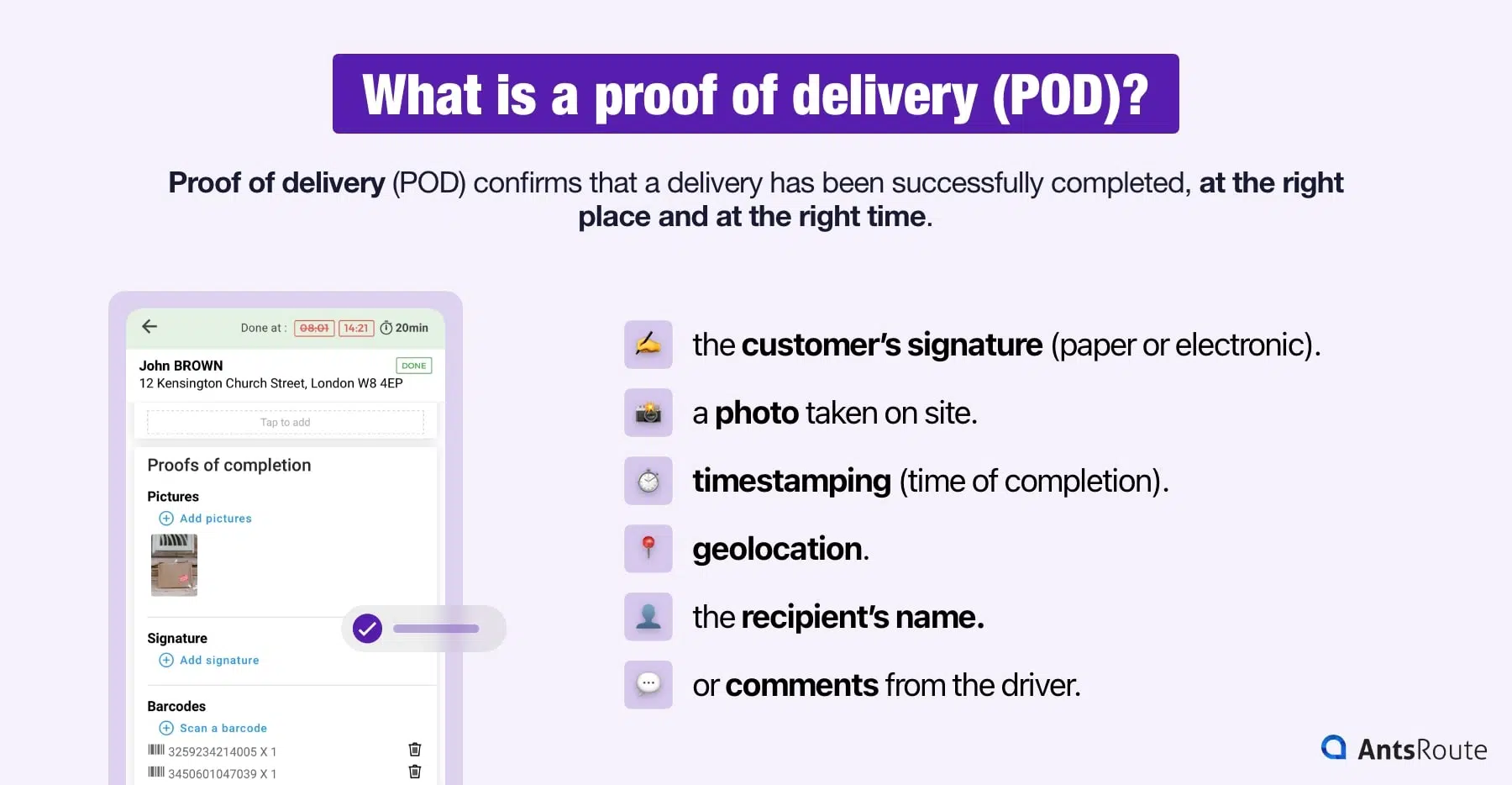
The elements that make up a proof of delivery.
Why delivery confirmation has become a strategic document
For a long time, proof of delivery was treated as a simple administrative formality, often dealt with at the very end of a route. In practice, it was rarely used, sometimes lost, and only consulted when an issue arose.
Today, the context has changed dramatically. Companies are facing growing volumes, more demanding customers and constant pressure on costs. In this environment, this document to validate a delivery becomes a single source of truth: it is what confirms that the promise made to the customer has actually been fulfilled.
In concrete terms, a reliable proof of delivery makes it possible to drastically reduce disputes, particularly claims such as “parcel not received” or “service not carried out”. It also secures contractual relationships by providing factual, time-stamped evidence in the event of a disagreement.
Internally, it plays a key role in operational efficiency. Without usable proof, invoicing is delayed, administrative teams spend time searching for information, and field teams are contacted after the fact to justify their visits. Conversely, a centralised proof of delivery that is accessible in real time helps speed up the billing cycle, reduce low-value administrative tasks and improve coordination between field teams and the back office.
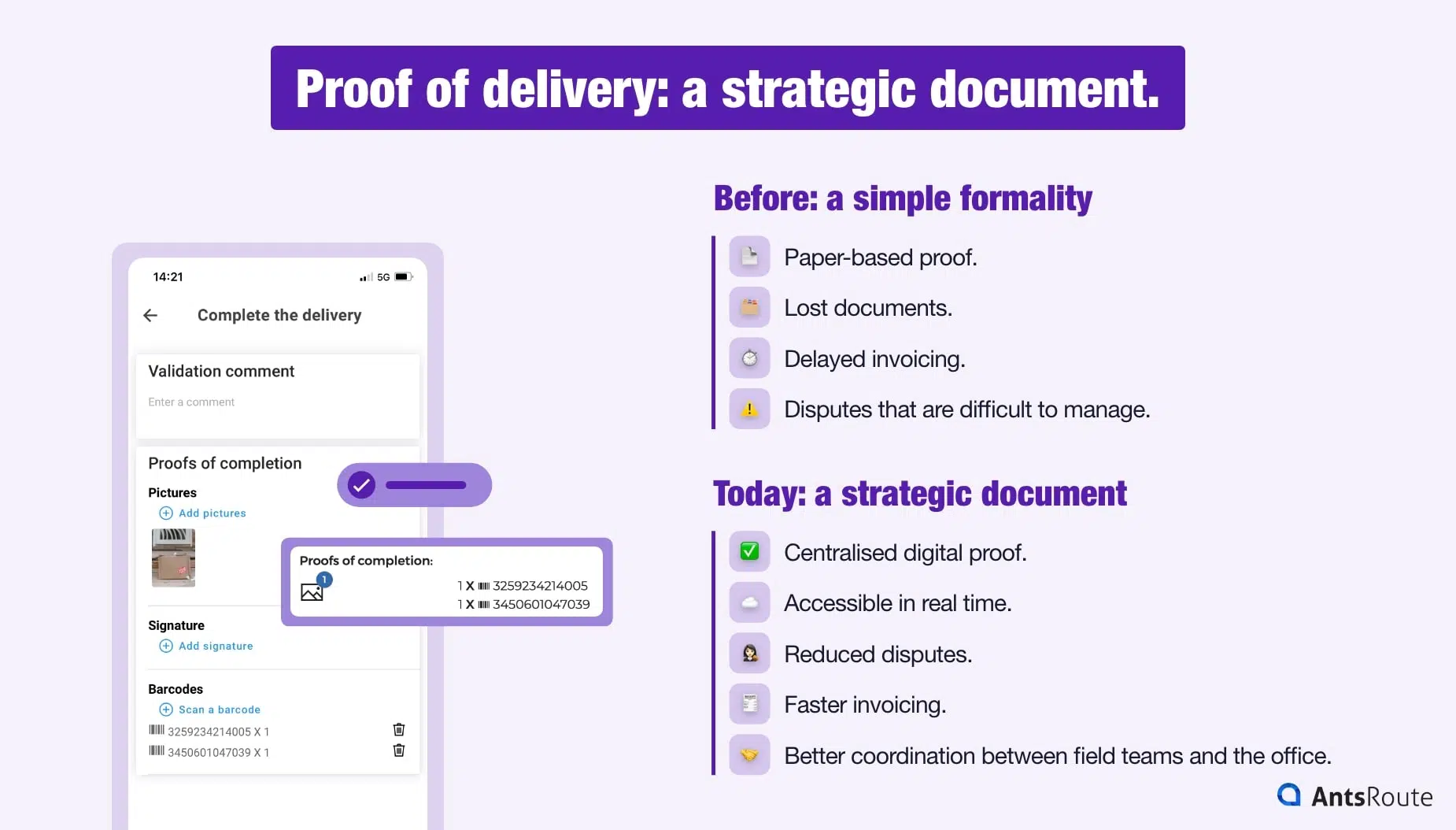
Proof of delivery becomes a strategic document.
The different types of proof of delivery
There is no single, universal proof of delivery. Instead, several formats exist, each more or less suited depending on the sector, the level of risk and the type of service performed. Choosing the right format is essential to strike the right balance between reliability, ease of use in the field and legal value.
Paper signatures are still used in some traditional contexts, but they quickly show their limitations: lost documents, manual data entry and processing delays. Digital formats, on the other hand, offer far greater traceability and integrate more easily with existing tools.
In modern operational environments, the trend is clear: companies combine several proof elements to strengthen reliability without adding unnecessary workload for field teams.
Comparison of the main proof of delivery formats
| Type of proof | Use case | Advantages | Limitations |
| Paper signature | Traditional delivery | Simple, familiar | Can be lost, manual data entry, slow processing |
| Electronic signature | B2B | Time-stamped, traceable | Depends on customer acceptance |
| Photo | Contactless delivery | Visual evidence | Does not identify the recipient |
| GPS geolocation | Last mile | Confirms the exact location | Insufficient on its own |
| Combined ePOD | Modern logistics | Reliable, comprehensive | Requires a suitable digital tool |
☝️ The most effective solutions combine several elements (photo + GPS + timestamp + signature).
Electronic proof of delivery (ePOD): a modern standard
Electronic proof of delivery, or ePOD, has now established itself as the standard for organisations managing complex routes or high volumes. It is based on the use of a mobile application by drivers, directly in the field.
At the time of delivery, the field agent validates the step in just a few seconds. Key information (signature, photo, comment, time of visit, GPS position) is automatically captured and instantly transmitted to the central system.
This approach offers a major advantage: it eliminates any break between the field and the back office. Data is no longer re-entered, lost or sent with delays. It becomes immediately usable for operational monitoring, invoicing and customer relations.
Why companies are switching to ePOD
Moving to ePOD is not just a technological shift. Above all, it addresses very real, day-to-day challenges: administrative overload, lack of visibility, fragmented tools and resistance to change.
By centralising proof of delivery within a single system, companies eliminate daily workarounds (paper, Excel files, SMS messages, isolated photos) and restore consistency to their processes. Field teams gain autonomy, while office teams finally have access to reliable, real-time data.
Real-world use case: last-mile delivery
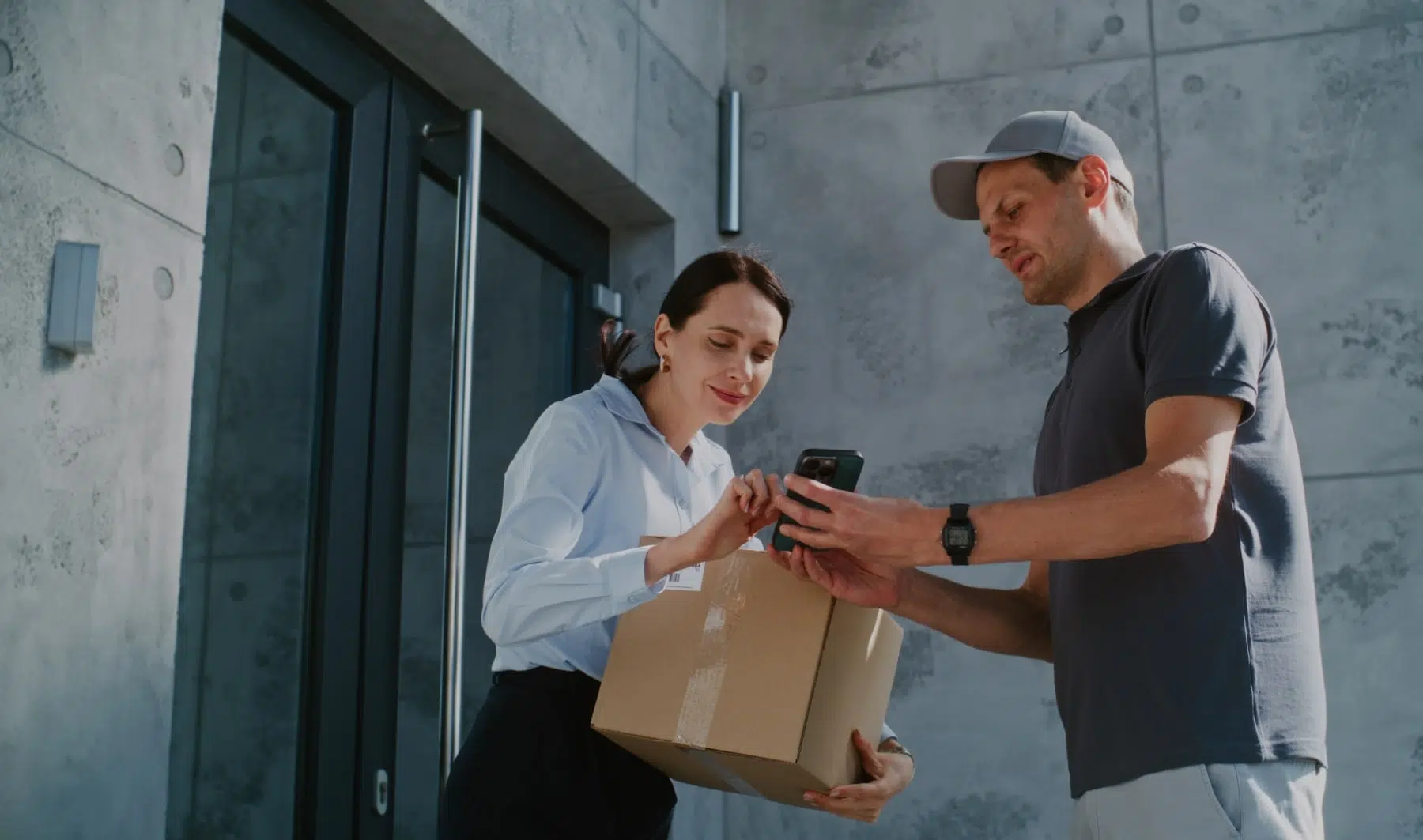
In last-mile delivery, proof of delivery plays a decisive role in limiting disputes and strengthening the customer relationship.
At the time of delivery, the driver can:
- take a photo of the package left at the doorstep or handed to the recipient,
- scan the parcel’s barcode to confirm the delivery identification without ambiguity,
- request an electronic signature from the customer,
- automatically validate geolocation and timestamp,
- trigger an automatic notification to the customer confirming the delivery.
This combination of elements provides a complete, factual and immediately usable proof of delivery. In the event of a dispute (“parcel not received”), all information is centralised and accessible within seconds, significantly reducing disputes, inbound calls and the time spent investigating.
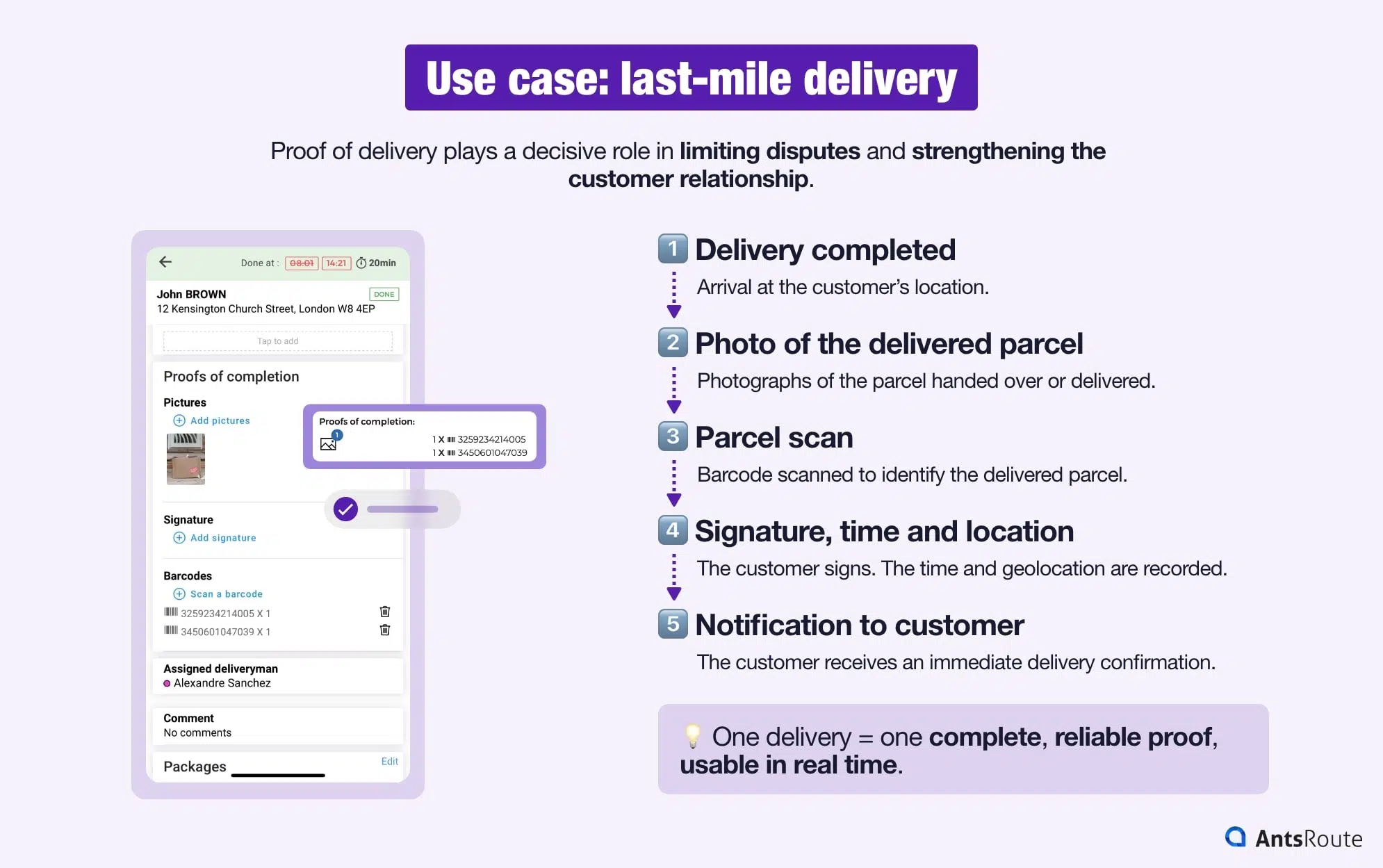
Use case: collecting proof of delivery during a last-mile delivery.
What AntsRoute customers say
Companies that have structured their proof of delivery processes quickly see very tangible operational gains.
“Automatic notifications, combined with photos, customer contact details, signatures and any additional delivery evidence, ensure total transparency. Leroy Merlin and their end customers can track the status of their deliveries in real time.” — Franck Dalet, Managing Director of Transport Dalet, a delivery partner for Leroy Merlin.
This type of feedback highlights a key point: reliable proof of delivery is not only about protecting yourself when something goes wrong. Above all, it simplifies day-to-day operations, reduces internal friction and restores visibility for teams.
☝️ Want to structure your proof of delivery without adding complexity to your field operations?
Discover how AntsRoute enables you to automatically collect reliable proofs of delivery, directly from your field teams’ mobile app.
Business impact: far more than just proof
Well-managed proof of delivery has a direct impact on performance:
- Faster Order-to-Cash (O2C) cycles: invoicing is triggered automatically.
- Fewer administrative tasks: no more re-entry or document hunting.
- Lower hidden costs: fewer disputes, fewer inbound calls, less time wasted.
- Stronger customer satisfaction: greater transparency and professionalism.
For many teams, it is a simple yet powerful lever to regain control over operations that have become increasingly complex.
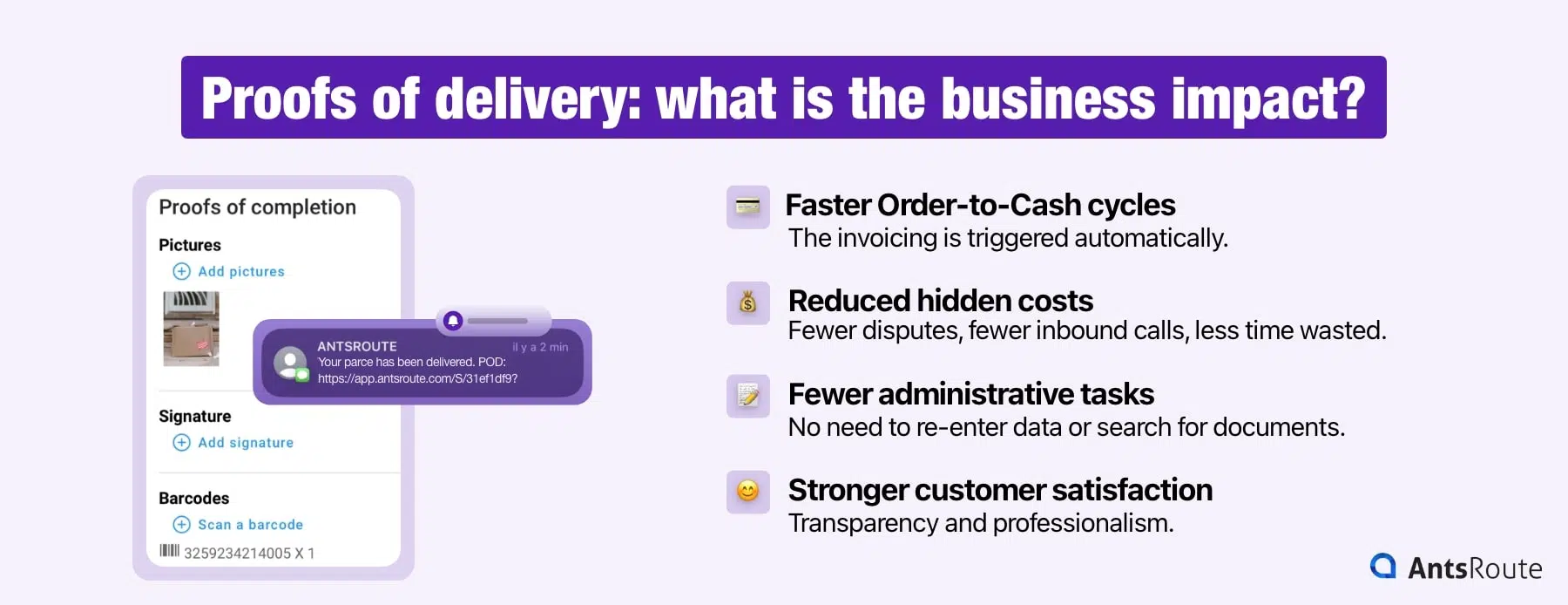
Proofs of delivery: what is the business impact?
How to implement an effective proof of delivery
Operational checklist:
- Centralise data capture through a mobile application.
- Standardise the required proof elements.
- Automate data collection and transmission.
- Link proof of delivery to route planning and field monitoring.
- Make validation simple and intuitive for field teams.
The goal is not to add constraints, but to make day-to-day operations smoother.
Does digital proof of delivery have legal value?
Yes. A digital proof of delivery based on an electronic signature has the same legal value as a handwritten signature, provided it complies with the applicable legal framework.
In the United Kingdom, electronic signatures are recognised by law, notably through The Electronic Communications Act 2000 and the associated regulatory provisions. At European level, the eIDAS Regulation (Regulation (EU) No 910/2014) states that a qualified electronic signature is legally recognised across all Member States of the European Union.
In practical terms, this means that companies can rely on electronic proofs of delivery (signature, timestamp, geolocation, identity of the signer) to secure their deliveries, field operations and invoicing, including in multi-site or cross-border contexts.
This legal recognition is a key factor in the adoption of ePOD, particularly for organisations subject to contractual, regulatory or audit requirements.
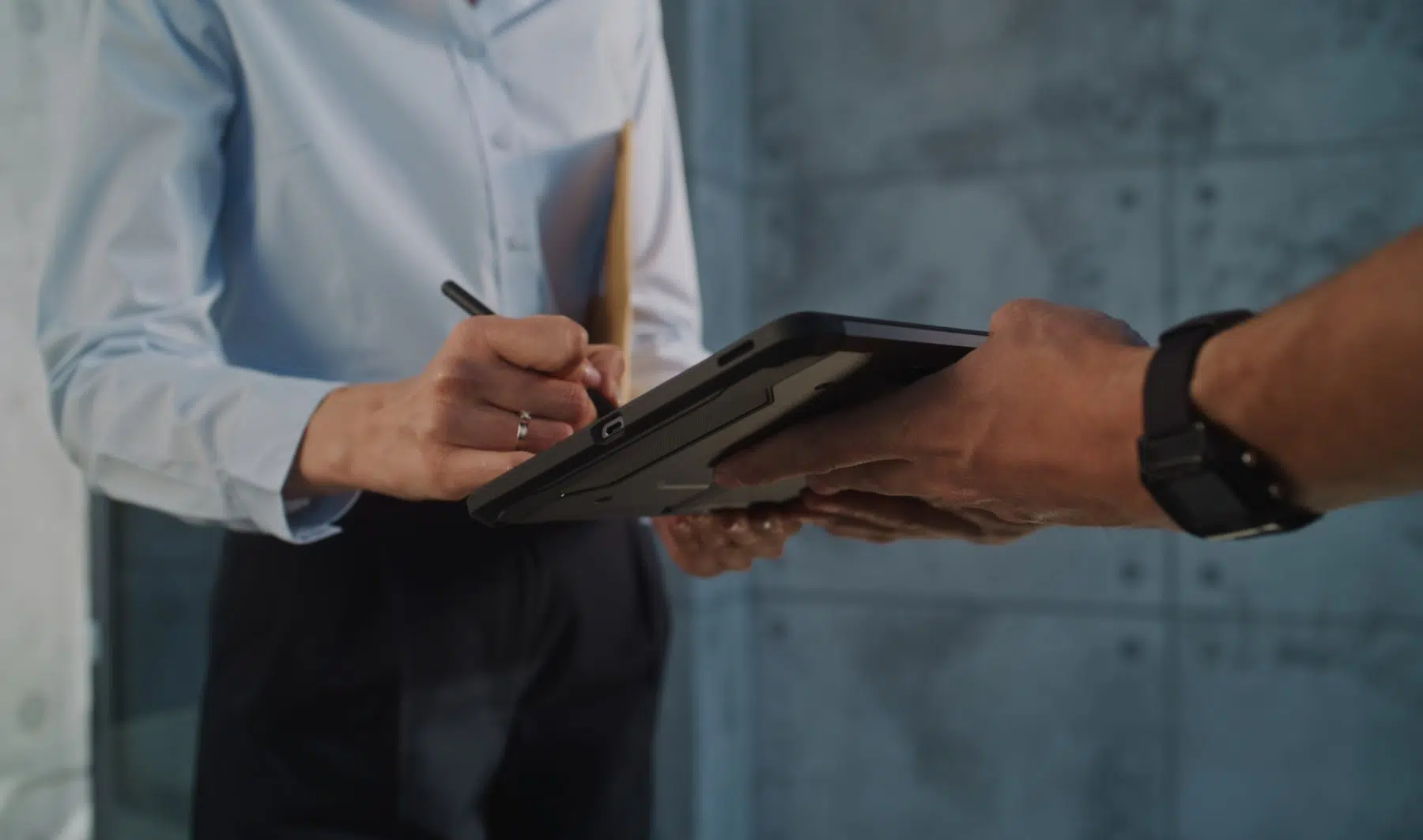
Example of a digital proof of delivery (ePOD)
To better understand what a digital proof of delivery covers, here is a concrete example of a validation carried out from a field mobile application.
When a driver or technician arrives on site, they open the corresponding step in their app. In just a few seconds, they can:
- take a photo of the delivered parcel or the completed operation,
- ask the customer to sign directly on the screen (electronic signature),
- add a comment if needed,
- validate the step.
The proof of delivery is then automatically enriched with the exact date and time (timestamp), the GPS position and the identity of the field agent.
All of this information is centralised in real time within the operations management tool. In the event of a dispute or a customer query, the proof is immediately accessible, with no manual searching or data re-entry required.
This simple workflow makes operations more reliable while remaining perfectly suited to the realities and constraints of field work.
AntsRoute guide: implementing a reliable, automated proof of delivery
At AntsRoute, proof of delivery is designed as an integrated part of route management, not as a simple end-of-job document.
1. Define the required proof elements
Depending on the type of delivery, it is possible to configure the required proof elements:
- photo of the delivered parcel,
- barcode scan to formally identify the parcel,
- recipient’s electronic signature,
- validation of the condition of delivered items or parcels (compliant or with issues),
- field comments where necessary.
This standardisation ensures consistent, usable and comparable proofs of delivery.
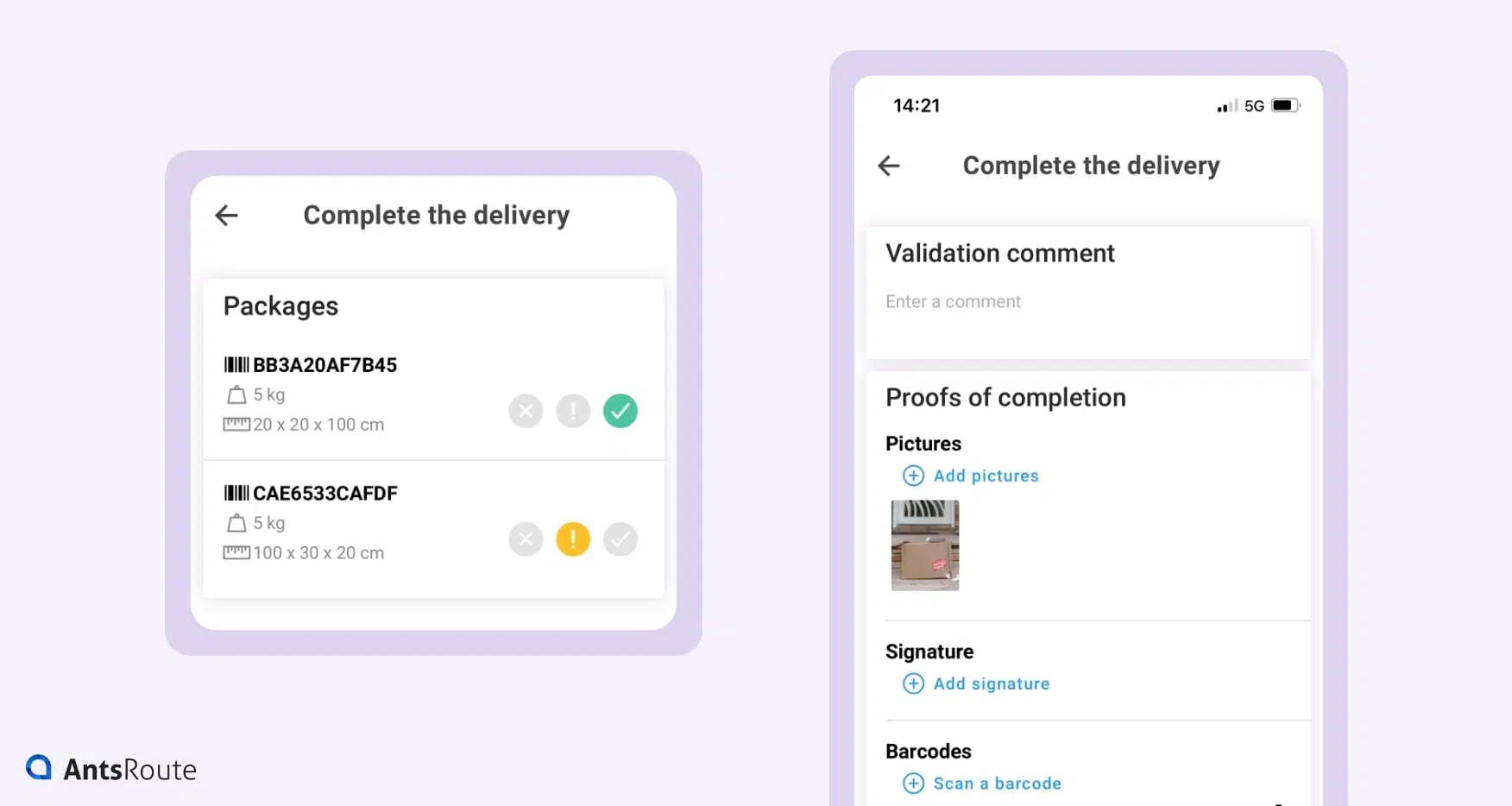
Collecting proofs of delivery with the AntsRoute mobile application.
2. Collect proof directly from the field
Drivers validate their deliveries directly from the AntsRoute mobile application (iOS and Android).
All information is automatically linked to the step:
- precise timestamping,
- GPS geolocation,
- identity of the field agent.
No data re-entry is required on the office side.
3. Centralise and use proofs in real time
Once collected, proofs of delivery are immediately available in the web interface:
- quick access in the event of a customer dispute,
- internal or external sharing if needed via notifications,
- faster triggering of invoicing.
This centralisation significantly reduces the time spent searching for supporting documents.
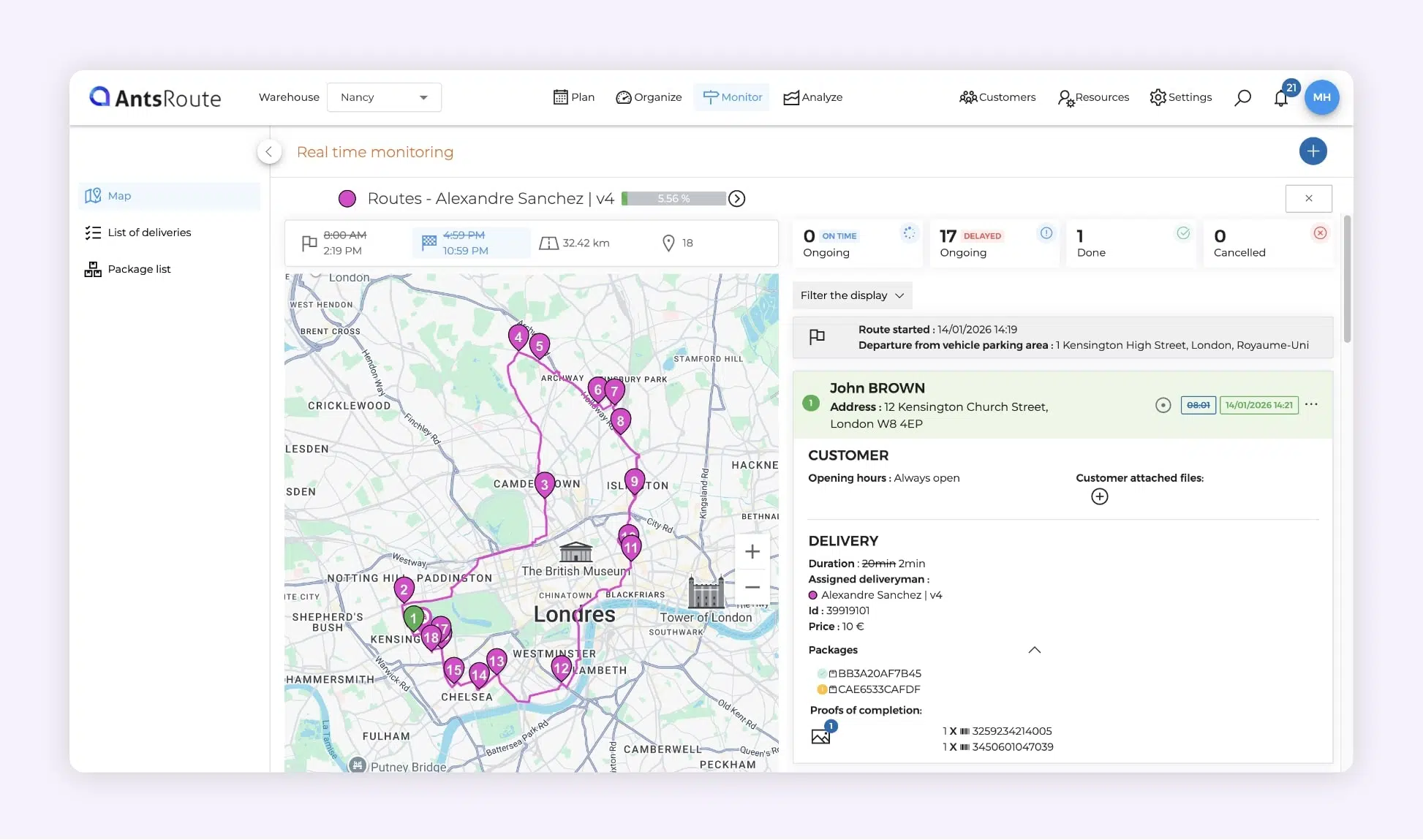
Accessing proofs of delivery from the AntsRoute web interface.
4. Improve reliability without adding complexity to operations
The goal is not to add constraints for field teams, but to secure operations without making routes more cumbersome.
By integrating proof of delivery directly into the planning, monitoring and reporting workflow, AntsRoute turns an administrative requirement into a lever for operational performance.
Proof of delivery is no longer just an end-of-route document. It is a structuring tool for securing operations, streamlining invoicing and sustainably improving the customer experience.
When it is digital and well integrated into planning and field monitoring tools, it enables teams to save time, reduce disputes and regain control over increasingly complex operations.
Would you like to see, in practical terms, how to automate and make your proofs of delivery more reliable?
➡️ Request an AntsRoute product demonstration
➡️ Try AntsRoute free for 7 days
Both options allow you to quickly assess the value of an integrated digital proof of delivery — with no commitment.
FAQ: Frequently asked questions about proof of delivery
POD is more comprehensive: it includes field data (time, location, photo, identity), not just a signature.
It is useful, but far more reliable when combined with a timestamp and geolocation.
It is not always legally mandatory, but it is essential to protect yourself in the event of a dispute.
Through a solution that offers APIs or connectors with your ERP, TMS or CRM.
A delivery note is a commercial delivery document that describes what is to be delivered (products, quantities, references). It usually accompanies the goods and may be signed by the customer as an acknowledgement of receipt.
A proof of delivery, on the other hand, is used to confirm that the delivery has actually been completed. It is collected at the time of delivery and includes factual elements such as a photo, an electronic signature, a timestamp or geolocation data.
In short, the delivery note describes the delivery, while the proof of delivery validates and secures it, particularly in the event of a dispute or to trigger invoicing.
WRITTEN BY

Marie Henrion
At AntsRoute, Marie has been the marketing manager since 2018. With a focus on last-mile logistics, she produces content that simplifies complex topics such as route optimization, the ecological transition, and customer satisfaction.
Free 7-day trial | No credit card required
Contenu
- What is a proof of delivery (POD)?
- Why delivery confirmation has become a strategic document
- The different types of proof of delivery
- Comparison of the main proof of delivery formats
- Electronic proof of delivery (ePOD): a modern standard
- Why companies are switching to ePOD
- Real-world use case: last-mile delivery
- What AntsRoute customers say
- Business impact: far more than just proof
- How to implement an effective proof of delivery
- Does digital proof of delivery have legal value?
- Example of a digital proof of delivery (ePOD)
- AntsRoute guide: implementing a reliable, automated proof of delivery
- 1. Define the required proof elements
- 2. Collect proof directly from the field
- 3. Centralise and use proofs in real time
- 4. Improve reliability without adding complexity to operations
- FAQ: Frequently asked questions about proof of delivery